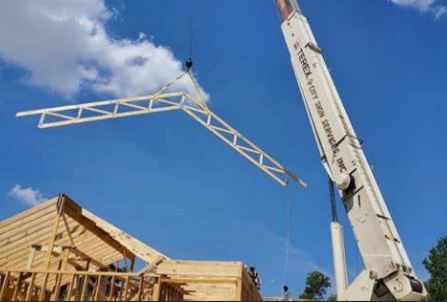
Raphael McMahon examines the effect of tariffs on key
materials and how rising costs are impacting the construction
sector and will ultimately affect house prices
Since his re-election in November 2024, trade tariffs have been
a cornerstone of US President Donald Trump’s agenda. On April 2,
in fact, Trump announced a baseline tariff of 10% on imports
from all countries.
However, countries deemed to have had unfavourable trade
relationships with the US are subject to higher rates. 50%
tariffs have been placed, for example, on Brazilian goods and
30% tariffs now apply to South African goods.
Tariffs have also been enacted on specific goods coming to the
North American country, irrespective of their origin, including
50% tariffs on all steel, aluminium and copper imports.
Restrictions on steel and aluminium imports will, according to
the White House, “protect America’s critical steel and aluminum
industries, which have been harmed by unfair trade practices and
global excess capacity”, allow the president to “adjust imports
being brought into the United States in quantities or under
circumstances that threaten to impair national security” and
counteract “the decline of domestic aluminum production”.
Higher material costs, higher house prices
Although confusion emerged following the introduction of
Trump’s measures, tariffs entail US-based importers paying more
to import goods from foreign nations, which usually
leads to increases in the prices that regular consumers pay. In
the case of the housing sector, for instance, more expensive
imported materials mean higher building prices which, in turn,
result in higher house prices for buyers.
This process seems to be playing out in real time. A July 2025
report from the Bank of America suggests that the cost of
building a new home in the US could rise by 3% by the end of the
year, and that tariffs are largely to blame: “We expect tariffs
to increase prices for HVAC [humidity, ventilation and air
conditioning], plumbing, appliances, electrical components and
flooring.”
“[The tariffs] may have an additional material impact on the
cost structure of homebuilding in the US, perhaps by another
4%-10% increase in material alone depending on geographic
location and the type of material being sourced,” said Stuart
Siegel, CEO of real estate firm Engel & Völkers’ Americas
operations, while in conversation with Reuters.
Why US construction is vulnerable
Tariffs are to blame for spikes in prices because the American
housebuilding sector is not exclusively domestic. The National
Association of Home Builders (NAHB) estimates that $204bn worth
of goods were used in the construction of new multifamily and
single-family housing in the US during 2024, $14bn of which were
imported from outside the US.
The American construction industry, which employs over 8m
workers, is particularly vulnerable to the 50% steel tariff; 28%
of its net shipments in 2024 were iron and steel.
Clement Cazalot, CEO of Boston-based Machinery Partner equipment
supplier, told PBC Today that it is not just construction
materials affected by the tariffs. A large proportion of the
machinery used on construction sites is itself “built from
imported steel”.
“A bulldozer, crane or crusher can see costs rise 10%-30% rom
tariffs alone … that means every job site pays more, not just
for materials, but for the machines that move them,” Cazalot
affirmed.
------
------
------
Click here for the full article
Source: pbctoday.co.uk


