
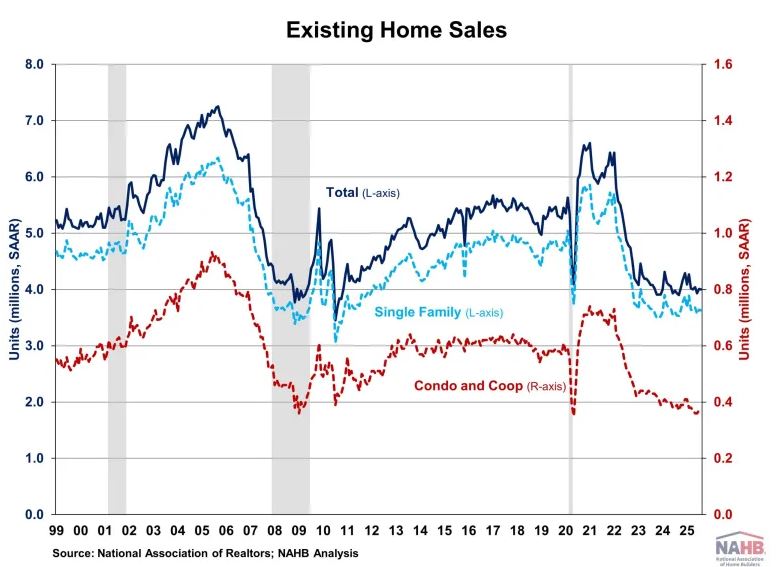
Total existing home sales, including single-family homes,
townhomes, condominiums, and co-ops, fell 0.2% to a seasonally
adjusted annual rate of 4.00 million in August. However, on a
year-over-year basis, sales were 1.8% higher than a year ago.
Other economic indicators including a rising stock market and
rising home values also are contributing to a sense of increased
wealth among homeowners, which could lead to lead to strong
furniture sales.
According to the National Association of Realtors, existing
home sales totaled 4 million, up 1.8% from August 2024 and down
just 0.2% from July. Year-over-year, sales rose in the Midwest
and South, and fell in the Northeast and West, while monthly
sales rose in the Midwest and West, and fell in the Northeast
and South, the NAR said.
Of the total sold, 3.63 million, or 90.8% were single-family
homes, up 2.5% from August 2024, with the balance being
condominiums or co-ops, down 5.1% from August 2024.
“Home sales have been sluggish over the past few years due to
elevated mortgage rates and limited inventory,” said NAR Chief
Economist Lawrence Yun. “However, mortgage rates are declining
and more inventory is coming to the market, which should boost
sales in the coming months.”
To Yun’s point, there were 1.53 million existing homes for sale
in August, up 11.7% from 1.37 million in August 2024 but down
1.3% from July. The total represents a 4.6-month supply of
unsold inventory, up from 4.2 months in August 2024 and
unchanged from July.
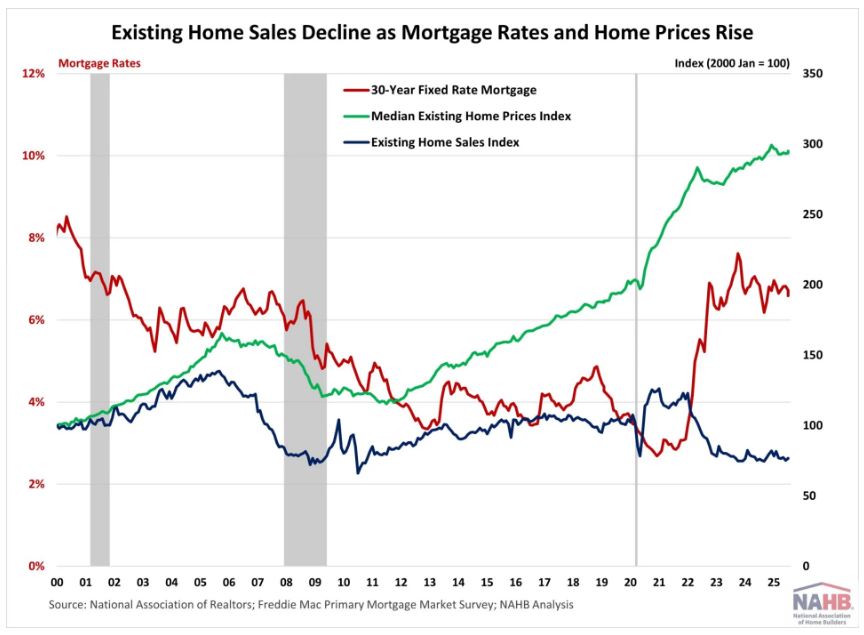
While inventory levels remain high, so do prices, which
continues to pose challenges for many buyers, including
first-time buyers. For example, the median home price was
$422,600 for all housing types, which was up 2% from $414,200 in
August 2024 and the 26th consecutive month of year-over-year
increases, the NAR said.
The median single-family home price in August was $427,800, up
1.9% from last year. This compares with $366,800 for
condominiums and co-ops, up .6% from August 2024.
By region, the activity was as follows:
In the Northeast, existing home sales totaled 480,000, down 2%
from August 2024 and down 4% from July. The median sale price in
the region was $534,200, a 6.2% increase from August 2024.
In the Midwest sales totaled 960,000, up 3.2% from August 2024
and up 2.1% from July. The median sale price was $330,500, up
4.5% from August 2024.
In the South, sales totaled 1.83 million, up 3.4% from August
2024 and down 1.1% from July. The median sale price was
$364,100, up .4% from August 2024.
In the West, sales totaled 730,000, down 1.4% from August 2024
and up 1.4% from July. The median sale price was $624,300, up
0.6% from August 2024.
“Record-high housing wealth and a record-high stock market will
help current homeowners trade up and benefit the upper end of
the market,” Yun said. “However, sales of affordable homes are
constrained by the lack of inventory. The Midwest was the
best-performing region last month, primarily due to relatively
affordable market conditions. The median home price in the
Midwest is 22 percent below the national median price.”
Other highlights of the report are as follows:
+ Homes were on the market for a median of 31 days in August, up
from 26 days in August 2024 and up from 28 days in July.
+ First-time homebuyers accounted for 28% of sales, up from 26%
in August 2024 and unchanged from July.
+ Cash sales accounted for 28% of transactions, up from 26% in
August 2024 and down from 31% in July. Individual investors or
second home buyers that make up many cash sales accounted for
21% of transactions, compared with 19% in August 2024 and 20% in
July.
+ About 2% of sales were distressed sales, including
foreclosures and short sales, up from 1% in august 2024 and
unchanged from July.
+ The average 30-year fixed-rate mortgage was 6.59% in August,
compared with 6.50% a year earlier and down from 6.72% in July
according to Freddie Mac.
As small as the increases might be, the good news for the
industry is that home sales continue to rise, which of course
almost always leads to some type of furniture sales.
Also of note is the increase in the number of first-time
homebuyers, another area of sales growth opportunity for the
industry. We believe that despite some challenges — including
higher finished product costs resulting from tariffs — existing
home sales and new home construction will continue amid an
environment of lower interest rates and rising consumer
confidence. While there are no guarantees in such volatile
times, the industry may have better times ahead thanks to a
confluence of factors that contributes to a strong housing
market that provides plenty of options for buyers and sellers
alike.
Source:
homenewsnow.com


